Highest paying outdoor jobs: what they actually pay
Federal wage data for fourteen outdoor occupations — median pay, what the top 10% earn, whether housing is included and what it costs, and when hiring actually opens. Every figure sourced and dated.
The spread matters more than the median
Every list of outdoor jobs quotes a single number. That number hides the thing you actually need to know — how far apart the bottom and the top of each occupation are. A wide bar means location, specialisation and employer decide your pay. A narrow bar means the job pays what it pays.
Annual pay range by occupation
Bar spans the 10th to 90th percentile · dot is the medianAll fourteen occupations
Click any column heading to sort| Occupation | Median pay | Lowest 10% | Top 10% | Entry education | Growth to 2035 | Housing | Season |
|---|---|---|---|---|---|---|---|
| GeoscientistField geology, energy & environment | $101,920 | $59,330 | $200,230 | Bachelor's | +5% | Sometimes | Both |
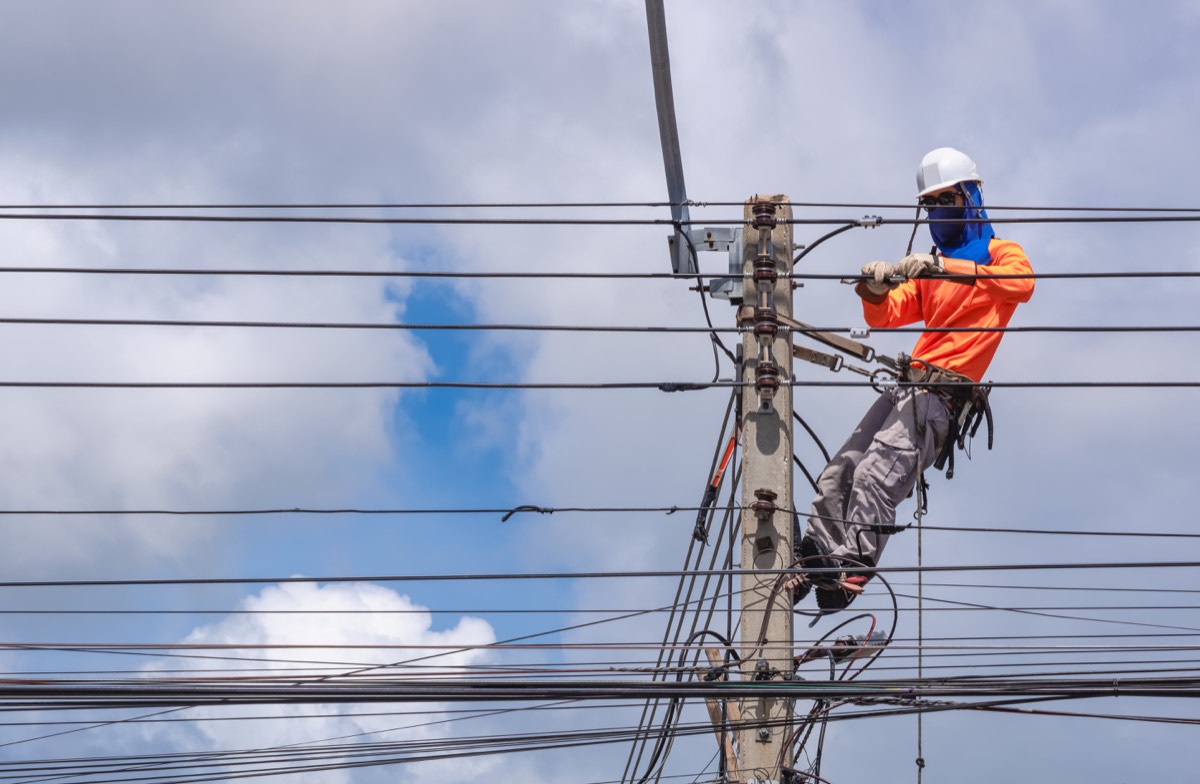
| Power-line installerElectrical power-line installers & repairers | $95,320 | $51,470 | $128,690 | High school | +10% | Rarely | Year-round |
| Wildlife biologistZoologists & wildlife biologists | $76,780 | $49,100 | $126,440 | Bachelor's | +4% | Sometimes | Both |
| Land surveyorSurveyors | $75,440 | $46,880 | $125,590 | Bachelor's | +6% | Rarely | Year-round |
| ForesterConservation scientists & foresters | $73,010 | $47,550 | $110,410 | Bachelor's | +4% | Sometimes | Both |
| Wind turbine technicianWind turbine service technicians | $64,120 | $49,230 | $92,460 | Postsecondary award | +30% | Rarely | Year-round |
| Heavy equipment operatorConstruction equipment operators | $59,600 | $41,550 | $100,660 | High school | +4% | Rarely | Year-round |
| FirefighterStructural — wildland is paid on a different scale | $59,280 | $34,910 | $101,040 | Postsecondary award | +4% | Rarely | Year-round |
| Solar PV installerSolar photovoltaic installers | $53,140 | $41,600 | $79,970 | High school | +37% | Rarely | Year-round |
| Oil & gas workerRoustabouts, derrick & service unit operators | $51,650 | $37,280 | $82,360 | High school | +2% | Usually | Year-round |
| Logging workerLogging workers | $49,660 | $35,170 | $74,080 | High school | −5% | Rarely | Year-round |
| Forest & conservation workerTrail crew, habitat, reforestation | $43,680 | $33,780 | $57,220 | High school | −2% | Sometimes | Seasonal |
| Grounds maintenance workerBroad group — arborists earn considerably more | $40,082* | $31,221* | $58,448* | Varies | +5% | Rarely | Year-round |
| Recreation workerPark & resort staff, guides, outfitters | $36,560 | $27,600 | $50,410 | High school | +4% | Sometimes | Seasonal |
The cheapest-looking park housing is often the most expensive
Seasonal employers advertise a housing rate. Some of those rates include three meals a day and some include none, and almost nobody says which when they quote the number. Here is what four national park operators actually charge, converted to a weekly figure.
What park housing costs per week
Quoted from each employer's own recruiting page$17/dayRoom and board, everything in
Xanterra's Yellowstone rate covers dormitory housing, Wi-Fi, laundry, utilities and all three meals, deducted biweekly from pay. For a full summer season that is roughly $2,100 in total living costs.
$0What ski resorts publish
Major resorts offer employee housing and none of them state the price publicly. Winter Park's own page says only "whether included in the compensation package or provided at a cost." Ask before you accept an offer.
50%The discount that isn't a meal plan
Delaware North offers half-price food at its own outlets rather than an employee dining room. That is a real benefit, but it is not the same as three meals a day included in your housing rate.
Hiring closes months before the season starts
This is the single most common reason people miss out. National Park Service summer positions are advertised from October, and some announcements close at the first 75 applicants. If you start looking in April for a June start, you are applying for what is left.
When to apply, when you work
Windows quoted from agency and employer sourcesWhat the numbers actually say
$95,320You do not need a degree
Power-line installers earn a median of $95,320 on a high school diploma — more than every degree-required occupation here except geoscientist. Heavy equipment operators top out near $100,000 on the same education.
+50%Growth is in energy, not recreation
Wind turbine technicians are projected to grow 30% by 2035 and solar installers 37% — among the fastest-growing occupations in the country. Traditional conservation work is flat or shrinking.
−5%Some classic jobs are contracting
Forest and conservation work is projected to decline 5%, logging 2%. These remain real careers, but they are getting harder to enter, not easier.
How to choose
Pay is one input. Most people arrive here with a constraint that matters more.
- You need housing included. Seasonal park and resort work often provides it, and what the rate covers varies enormously. Outdoor jobs that include housing →
- You do not have a degree. Six of the thirteen occupations here need only a high school diploma or a postsecondary award, and three of those pay above $58,000. Outdoor jobs that pay well without a degree →
- You want a season, not a career. Hiring windows close months before the season starts. The outdoor hiring calendar →
- You are looking at a winter season. Resorts advertise staff housing but none of them publish what it costs, which changes how you should read an offer. Ski resort jobs, pay and housing →
- You have the job and need to kit up. What a season actually requires you to buy, and the safety equipment you should never buy from a link. Season gear →
- You want to work in the parks. Federal and concessionaire jobs are separate systems with separate application routes and separate calendars. How park hiring works →
Where to find these jobs
No single board covers outdoor work well, so it is worth knowing which source owns which category.
- Federal roles — park ranger, wildland fire, Forest Service — are posted on USAJOBS and nowhere else. Filter Work Type to Temporary, and search "forestry technician" as well as "wildland firefighter".
- National park hospitality and retail is run by concessionaires, not the Park Service. Xanterra, Aramark and Delaware North each hire separately, on their own timelines.
- Ski resorts hire directly through their own career pages, typically opening in September for the winter season.
- Trades — line work, heavy equipment, wind — go through union locals and apprenticeship programs far more than through job boards.
- Outdoor industry employers — RV and powersports dealers, outfitters, outdoor retail — are scattered across general boards. Keeping It Outside Jobs is a niche board that collects them in one place, which is genuinely useful for that category.
Methodology
- Wage source
- U.S. Bureau of Labor Statistics, Occupational Outlook Handbook — national estimates, May 2025 wage data, 2025–2035 projections. Retrieved 29 August 2026.
- Housing source
- Quoted directly from each employer's own recruiting pages. Daily rates converted to weekly at seven days. Where an employer does not publish a rate, we say so rather than estimate.
- Calendar source
- National Park Service and Department of the Interior hiring guidance, plus the season dates each concessionaire publishes. Windows shift slightly year to year — always check the live posting.
- What "median" means
- Half of workers in the occupation earned more, half less. It is not an average and it is not a starting salary.
- Known limits
- BLS occupations are broader than job titles. Park ranger, arborist, ski patrol and raft guide do not map cleanly to a single BLS occupation, or are federal GS-scale positions BLS wage data does not describe. Where that is true we say so rather than publish a number that looks precise and is not.
- Housing and season columns
- These describe the dominant pattern for an occupation, not a guarantee. Seasonal figures are verified against named employers. Occupations marked "rarely" are trades where employer housing is not customary — remote-site work more often pays a per diem — which is a general industry pattern rather than a sourced figure, and is noted as such on each role page.
- Seasonal work
- Annual medians describe year-round employment. A four-month season pays roughly a third of an annual figure, before any housing deduction.
- Corrections
- If a figure here is wrong or out of date, tell us and we will fix it and note the change.
Common questions
What is the highest paying outdoor job?
Of the occupations covered here, geoscientists have the highest median at $101,920 and the highest ceiling at $200,230 for the top 10% — but the job requires a bachelor's degree and much of the work is office-based between field seasons. For the highest pay without a degree, power-line installation is the answer: $95,320 median, high school entry, and a top 10% above $128,000.
Which outdoor jobs pay well without a degree?
Power-line installer ($95,320), wind turbine technician ($64,120, postsecondary award rather than a degree), heavy equipment operator ($59,600) and solar installer ($53,140) all enter at high school level. The trades route generally pays better than the conservation route at every stage, which surprises most people looking for outdoor work.
How much does national park employee housing cost?
It depends entirely on whether meals are included. Xanterra charges $17.00 a day at Yellowstone and $15.74 a day at Glacier, and both rates cover dormitory housing, utilities, laundry and three meals a day. Delaware North charges $50–$75 a week at Grand Canyon, but has no employee dining room — you cook for yourself in a shared kitchen. The cheaper headline rate is not necessarily the cheaper season.
When should I apply for a summer outdoor job?
Far earlier than most people expect. National Park Service summer announcements run from October to February, and some close at the first 75 applicants. Federal wildland fire postings open on 1 October for BLM and NPS and 15 October for the Forest Service. Ski resorts hire for winter from September. Applying in April for a June start means competing for what is left.
Is seasonal outdoor work financially viable?
It can be, but not on the annual figures in the table above. A season is four to six months, so a role with a $43,680 annual median pays roughly $15,000–$22,000 for a season. What makes it work is that housing and often meals are included, which removes the largest expense — and many people stack a summer park season with a winter resort season.